

“Root canal” are two words that still make patients wince before they’ve even asked a question. The reputation is worse than the reality — significantly worse. But what patients should actually be afraid of isn’t the procedure. It’s waiting too long to get one.
Here’s how to recognise the signs, what they mean, and what happens if you ignore them.
What Is a Root Canal, and Why Would You Need One?
Inside each tooth is a soft tissue called the dental pulp — a network of nerves, blood vessels, and connective tissue. The pulp is contained in narrow channels (canals) that run from the tooth’s crown down to the tip of the roots.
When bacteria enter the pulp — through a deep cavity, a crack in the tooth, or a failed filling — infection sets in. The pulp becomes inflamed, then dies. As bacteria multiply and spread toward the root tip, an abscess can form in the surrounding bone.
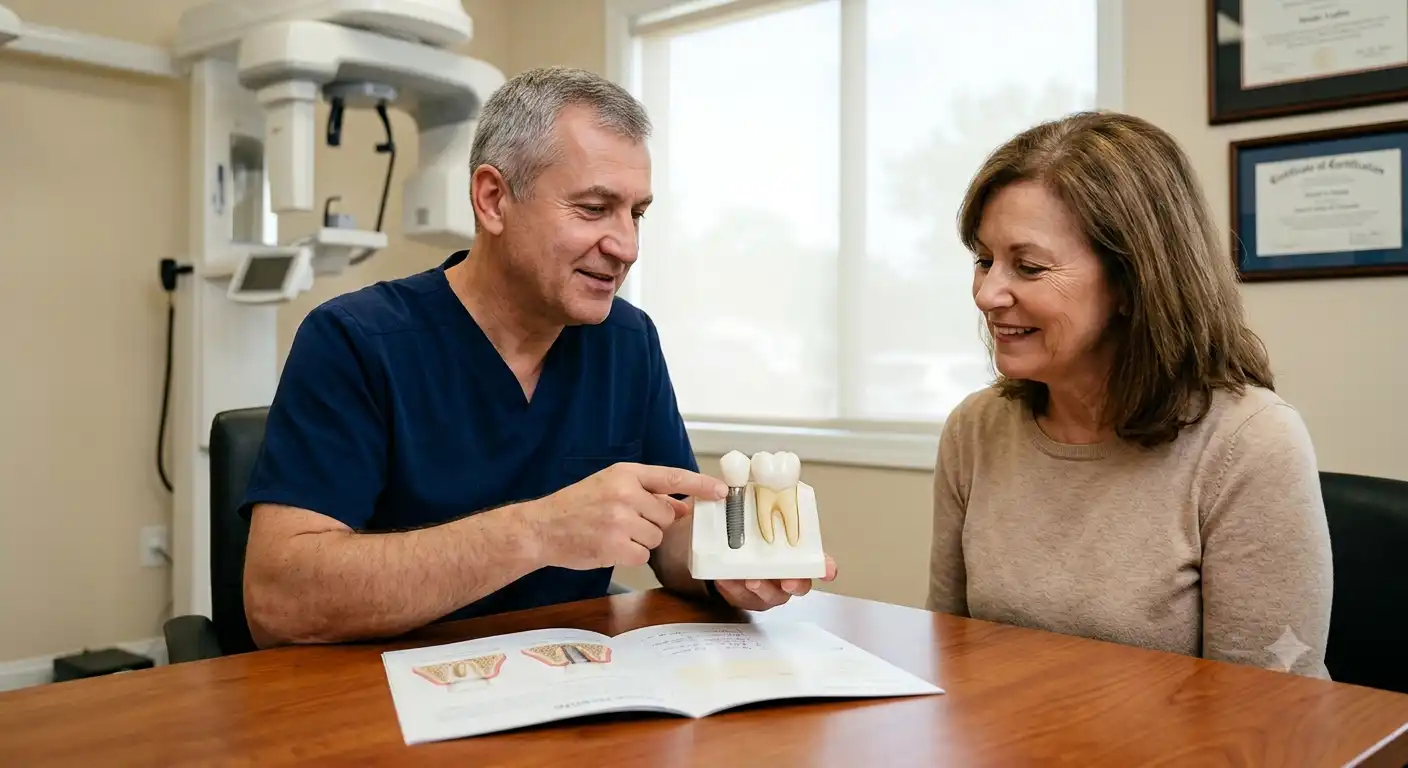
A root canal removes the infected or damaged pulp, disinfects the canal system, fills and seals it, and covers the tooth with a dental crown to protect the now-hollowed structure. The tooth stays in place. You keep it.
7 Signs You May Need a Root Canal
1. Persistent, severe toothache: Pain that doesn’t go away — especially throbbing pain that worsens when you lie down or bend over — is a red flag. It often indicates that the nerve inside the tooth is inflamed or infected.
2. Prolonged sensitivity to heat or cold: It’s normal for teeth to react briefly to extreme temperatures. It’s not normal for that sensitivity to linger for 30 seconds or more after the stimulus is removed. Lingering cold or heat sensitivity suggests the nerve is compromised.
3. Darkening of the tooth: A tooth that has turned grey, brown, or noticeably darker than its neighbours is likely undergoing internal decomposition. Dead pulp tissue discolours the tooth from the inside out.
4. Swelling in the gum or face: A raised bump on the gum near a tooth — sometimes called a gum boil or dental abscess — indicates that infection is draining from the root. Swelling that extends to the cheek, jaw, or neck is a dental emergency and needs same-day care.
5. Sensitivity when biting or pressing on the tooth: Pain when chewing, or even just when you press on the tooth with a finger, indicates inflammation at the root tip — a sign that infection has spread into the surrounding bone.
6. A tooth that feels loose: Infection at the root tip softens the bone around it. This can cause the tooth to feel slightly mobile — even in adults, where loose teeth have no normal explanation.
7. No symptoms at all: This is the one that catches patients off guard. Dead pulp doesn’t always hurt. Some teeth become infected and completely asymptomatic — only detectable on X-ray. This is why regular checkups matter: X-rays identify infections that haven’t yet declared themselves with pain.
The Danger of Waiting
Dental infection does not resolve on its own. Without treatment, an infected tooth progresses from pulp involvement to a periapical abscess, to spreading infection through the jaw and surrounding bone. In rare but documented cases, dental abscess has spread to the floor of the mouth, neck, or airway — a life-threatening emergency called Ludwig’s angina.
The American Association of Endodontists notes that root canal treatments have a clinical success rate of 85–97% when performed before infection spreads too far. That success rate drops as the infection becomes more extensive and involves more of the surrounding bone.
Acting early keeps your options and your tooth intact.
What to Expect From a Root Canal at Bright Smile Dental
The procedure itself is performed under local anaesthetic. Most patients report that it feels similar to having a filling placed — pressure and movement, but not pain. The post-procedure soreness that follows is typically manageable with over-the-counter pain relief for 24–48 hours.
After the root canal, a crown is placed to protect the treated tooth from fracture.
Tooth Pain in Brooklyn? Don’t Wait — Call Us Today
Root canal infections do not resolve on their own. The longer you wait, the more the infection spreads — and the more complex and costly the treatment becomes.
If you’re experiencing any of the symptoms above, call Bright Smile Dental at (646) 859-7048 Dr. Vadim sees urgent dental cases in Brooklyn and will get you seen as quickly as possible.
Call (646) 859-7048 Or Book an Emergency Appointment Online.