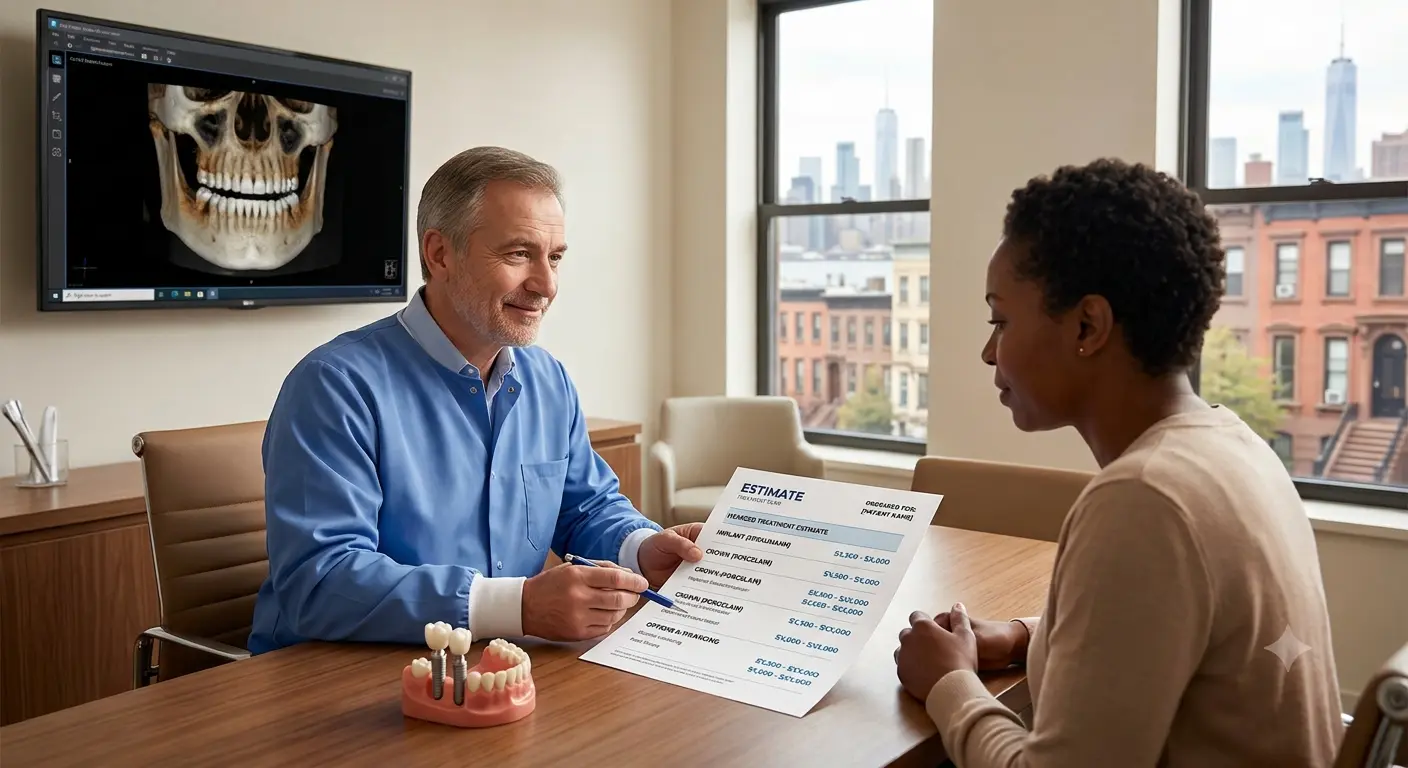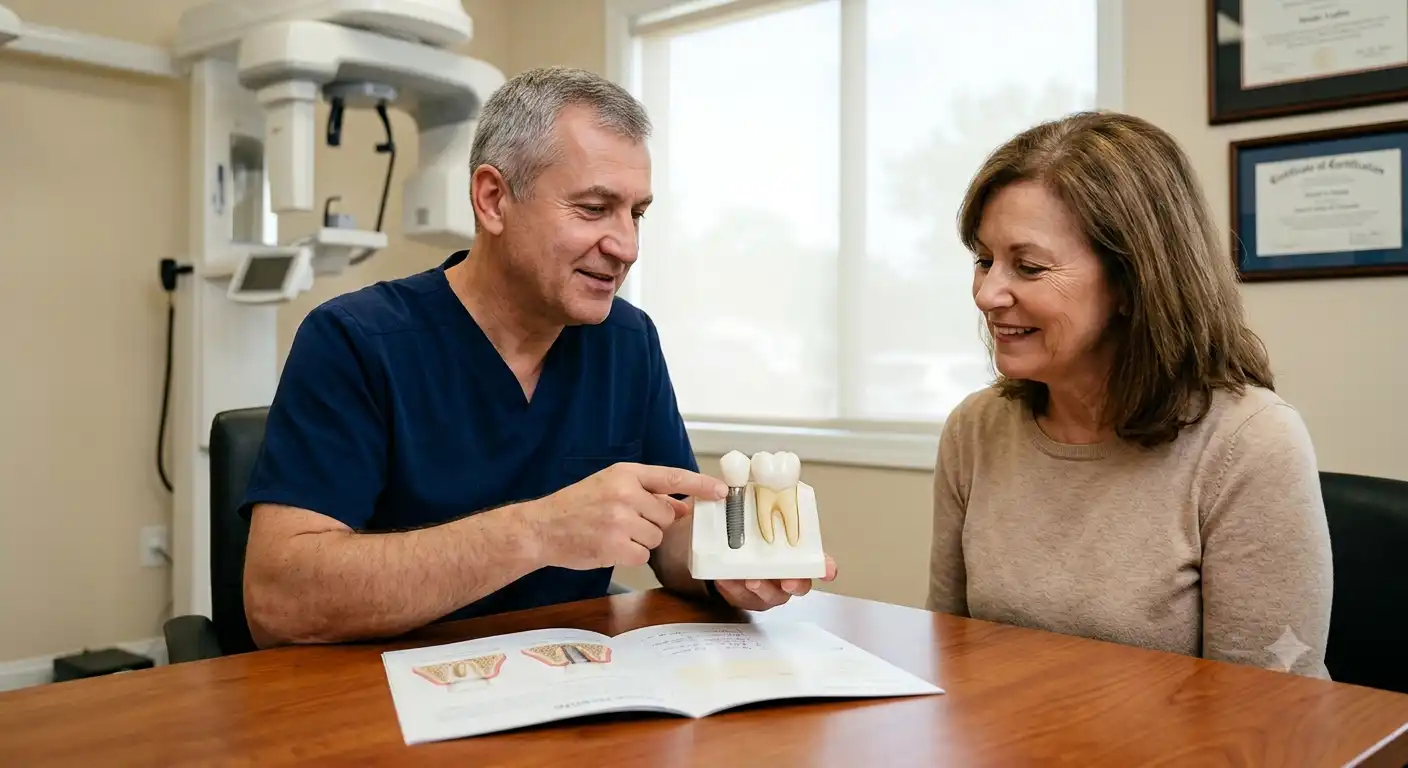


It’s one of the most common questions patients ask before committing to implant treatment: Are dental implants actually worth it? The cost is significant. The process takes time. And cheaper alternatives exist. So the question is completely fair.
The honest answer is yes — but with important context that depends on your situation. Here’s the full picture.
What You’re Actually Paying For
A dental implant isn’t just a tooth replacement. It’s a three-part restoration:
- The implant post — a titanium screw that integrates with your jawbone and replaces the tooth root
- The abutment — a connector piece that links the post to the crown
- The crown — the visible, tooth-shaped cap that restores function and appearance
Each component requires precision work. The placement surgery requires specialist training and 3D imaging equipment. The crown is custom-fabricated. The process involves multiple appointments over several months. The cost reflects all of that.
At Bright Smile Dental, Dr. Vadim uses the full clinical protocol — CBCT imaging, precise placement, and quality-matched crowns — because the long-term outcome depends on getting each stage right. You can review our full dental implant treatment details here.
The 25% Bone Loss Factor
Here’s the biological argument for implants that patients rarely hear explained clearly. When a tooth is lost and not replaced with a root-level restoration, the jawbone in that area begins to resorb. The body removes bone it doesn’t need to support. Research has documented that patients can lose approximately 25% of bone volume in the jaw within the first year after extraction alone.
Over time, this changes the shape of the face — giving the sunken look often associated with long-term denture wearers. It also progressively limits future treatment options, since implants require adequate bone to be placed.
Implants are the only tooth replacement that restores root-level stimulation and halts that process.
How Implants Compare Over 20 Years
Dentures cost less upfront. Bridges cost less upfront. But “total cost of ownership” tells a different story when you look at 20 years:
- Dentures typically need relining every 2–3 years and full replacement every 5–7 years
- Adhesives, cleansers, and ongoing adjustments add up
- As bone resorption changes the jaw shape, the fit deteriorates and the replacement cycle accelerates
- A dental bridge requires grinding down two healthy adjacent teeth and typically lasts 10–15 years before needing replacement
An implant, placed correctly, can last 20–30 years or more. The implant post itself may be a one-time investment; only the crown typically needs eventual replacement.
For many patients, implants are less expensive over their lifetime than the alternatives — and that’s before accounting for the value of having a stable, functional bite.
The Quality-of-Life Case
Beyond the clinical arguments, patients consistently report the same thing after getting implants: they stop thinking about their teeth. There’s no adhesive routine. No avoiding certain foods. No concern about the prosthetic shifting at a dinner table.
A 2019 review published in Clinical Oral Implants Research found that dental implant patients reported significantly higher satisfaction scores for chewing function, comfort, and aesthetics compared to patients with conventional dentures — and that this advantage was consistent across long-term follow-up periods.
That’s worth something that doesn’t show up on a cost comparison spreadsheet.
When Implants Might Not Be the Right Starting Point
Implants are not appropriate for every patient at every stage. Active gum disease, insufficient bone density, certain systemic health conditions, and heavy smoking are all factors that affect candidacy. Some patients need bone grafting first; some need periodontal treatment before implant placement can begin.
None of that means implants are unavailable to you — it means the sequence matters, and the right assessment is the first step.
For patients who have lost multiple teeth, same-day dental implants or All-on-X full-arch solutions may be appropriate alternatives to single-implant placement, depending on the clinical picture.
So — Are They Worth It?
For patients who qualify clinically and are looking for a permanent, long-term solution: yes, in almost every case. The biology is on their side, the long-term economics usually are too, and the quality-of-life improvement is documented and consistent.
For patients facing cost barriers, the conversation worth having is about financing options, phased treatment, and which alternatives are clinically reasonable given your specific situation — not whether implants have merit.
Book a consultation with Dr. Vadim at Bright Smile Dental →
Call: 646-859-7048
Book Online: https://vkdds.com/contact-us/
We’ll assess your candidacy, walk through your options honestly, and give you clear numbers — no pressure, no obligation.