
You have decided you want straighter teeth. The next question — Invisalign or braces — is one that adults tend to research extensively before they even walk into a dental office. The internet gives you a lot of opinions. Most of them are written by practices that offer one or the other and have a financial reason to push you in a particular direction.
This guide covers both options honestly. The right answer depends on your teeth, your lifestyle, and your priorities — not on which treatment has a better marketing budget.
How Each Treatment Actually Works
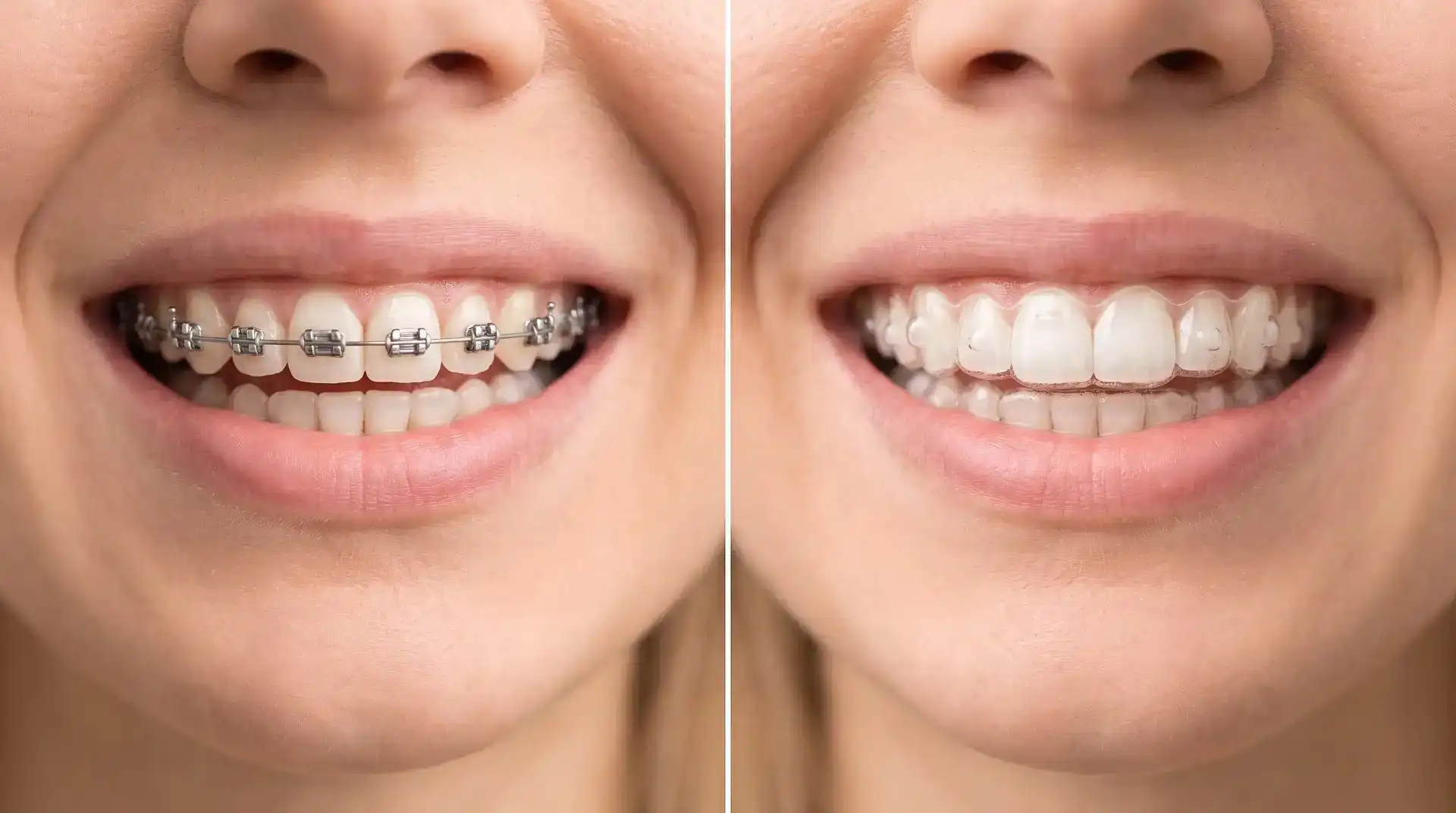
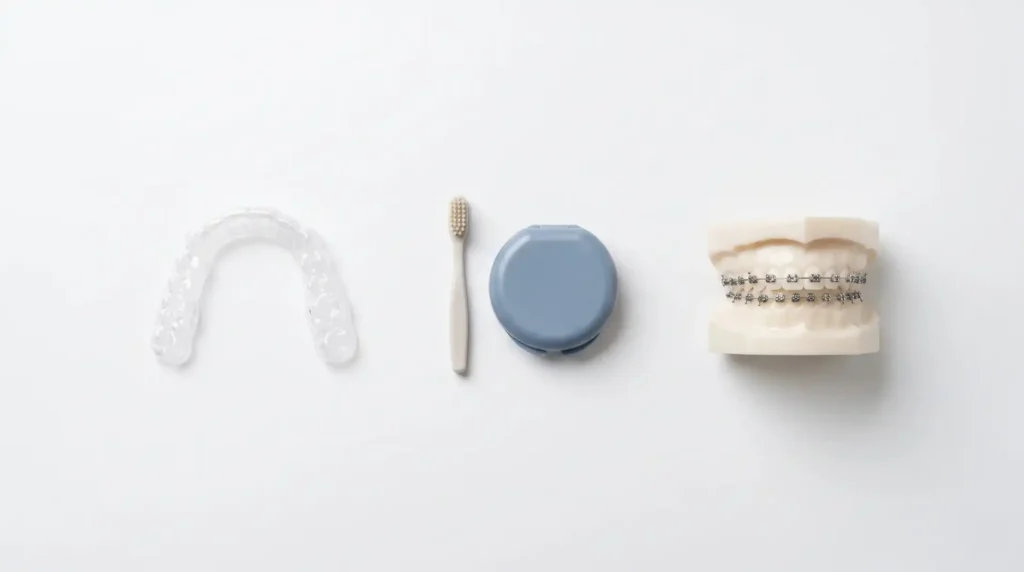
Traditional braces use metal or ceramic brackets bonded to the front surface of each tooth, connected by archwires that apply continuous, calibrated pressure. Your dentist or orthodontist tightens the wires at regular intervals — typically every 4–8 weeks — gradually shifting teeth into alignment. They are fixed to your teeth for the entire duration of treatment. You do not remove them. They work around the clock regardless of what you do.
Invisalign uses a series of custom-made clear plastic aligners that fit over your teeth like a thin mouthguard. Each set is worn for one to two weeks before you switch to the next in the series. The aligners must be removed before eating, drinking anything other than water, and brushing. They need to be worn 20–22 hours per day to work as planned.
Both move teeth through sustained, controlled pressure. The mechanism is the same. The delivery system is not.
What Each Does Well — And Where Each Falls Short
Braces:
Braces have a 100-year clinical track record. They are the benchmark against which every other orthodontic treatment is measured — for a reason.
Where braces have a genuine advantage:
Precision for complex cases. Braces give a clinician more control over individual tooth movement, particularly torque — the rotational positioning of a tooth along its long axis. For patients with severe crowding, significant bite discrepancies, or cases requiring substantial vertical correction, braces remain the more powerful tool.
No compliance variable. Braces work whether the patient is disciplined or not. They are on the teeth doing their job 24 hours a day. For patients who know themselves well enough to acknowledge they would struggle with consistent aligner wear, braces are the honest choice.
Often faster for complex cases. For patients with more involved misalignment, braces frequently achieve the outcome in less total time than Invisalign would require for the same result.
Where braces ask more of you:
Eating with braces requires avoiding hard, sticky, and crunchy foods for the full duration of treatment — typically 18 to 24 months. Brackets are sensitive to impact. Popcorn, hard candy, crusty bread, raw apples — off the menu. Thorough brushing and flossing also becomes significantly harder with brackets and wires in place. Food traps around brackets can cause white spot lesions — permanent enamel decalcification marks that remain visible after the braces come off. And they are visible throughout treatment in every conversation, meeting, and photograph.
Invisalign:
Invisalign has been continuously developed since 1998 and is now a clinically robust treatment for a wide range of alignment issues — particularly the mild-to-moderate cases that represent the majority of adult patients.
Where Invisalign has a genuine advantage:
Appearance during treatment. The aligners are clear and effectively invisible in normal social and professional settings. For adults in client-facing work or who simply prefer privacy around their dental treatment, this is a real benefit.
Dietary freedom. Because aligners are removed before every meal, there are no food restrictions. You eat exactly as you normally would. This matters over an 18-month treatment period more than patients initially expect.
Oral hygiene. Brushing and flossing with Invisalign is identical to brushing and flossing without any orthodontic treatment. The aligners come out, you clean your teeth normally, the aligners go back in. The plaque management challenge that comes with brackets simply does not exist.
Comfort. Invisalign aligners have smooth edges and no metal components. There is no bracket irritation on the inside of cheeks or lips, which is one of the consistent complaints during the adjustment period with braces.
Where Invisalign asks more of you:
Compliance is everything. Aligners must be worn 20–22 hours per day. Every meal, every coffee, every snack requires removal and reinsertion — with brushing in between. Patients who graze throughout the day, drink coffee at their desk, or find the removal routine genuinely disruptive will wear their aligners less than required. Treatment that proceeds without adequate wear time produces a gap between where the teeth are and where the aligner assumes they are — leading to poor tracking, extended treatment, and sometimes a need to restart a series of trays.
Invisalign also requires caution with drinks. Anything other than plain water should be consumed with aligners removed. Hot drinks can distort the plastic. Coloured drinks — coffee, tea, red wine — stain the trays and significantly affect their clarity.

Is It Better to Get Braces or Invisalign as an Adult?
For adults with mild to moderate misalignment, Invisalign is clinically appropriate and tends to be the preferred option because of the appearance and lifestyle advantages. A study published in the American Journal of Orthodontics and Dentofacial Orthopedics confirmed that clear aligners produce outcomes comparable to fixed appliances for this category of cases.
For adults with more significant alignment issues — severe crowding, substantial bite correction, complex rotation — braces remain the more reliable clinical tool.
The more useful question is not which treatment is better in general. It is which treatment is right for your specific teeth, given your realistic assessment of your own discipline and daily routine.
Why Do People Quit Invisalign?
The most common reason is compliance fatigue — the 20–22 hour daily requirement, sustained over 12–18 months, is more demanding in practice than it sounds in theory. Patients who underestimate the routine before they start are more likely to find it wearing halfway through.
Secondary reasons: discomfort when new trays are first placed, the visibility of tooth-coloured attachments that many cases require, and the lifestyle adjustment of removing aligners before every meal in every setting.
None of these are reasons to avoid Invisalign. They are reasons to go into treatment clear-eyed about what it requires — and to have an honest conversation with your dentist about whether your lifestyle supports it before you commit.
Does Your Face Change After Invisalign or Braces?
For most adults: not dramatically, and by design.
Both treatments move teeth within the existing bone structure. The direct result is straighter teeth and a corrected bite — not a change to the jaw or facial profile. Most patients see an improved smile without any noticeable shift in how their face looks.
There are exceptions. Correcting a significant overbite or open bite can subtly change how the lips rest and how the lower face appears in profile. These effects tend to be modest improvements in facial balance rather than dramatic alterations, and they are discussed during treatment planning when they apply.
Patients seeking significant facial or jaw repositioning alongside tooth alignment — that is a different conversation involving orthognathic surgery, and beyond the scope of either treatment discussed here.
What About Retainers After Treatment?
Both treatments end with a retention phase. This point is frequently misunderstood — and occasionally misrepresented.
Whether your teeth were moved by braces or Invisalign, they are not immediately stable in their new positions. Without a retainer, they will drift back toward where they started. This is called relapse, and it affects both treatment types equally.
After completing either treatment, you will need to wear a retainer — typically a clear removable retainer worn nightly. Consistent retainer wear is what protects the result. The single most common reason adults find themselves researching orthodontic treatment for the second time in their 30s or 40s is that they did not wear their retainer consistently after their teenage treatment.
Side-by-Side Summary
| Invisalign | Traditional Braces | |
| Best for | Mild to moderate cases | Mild, moderate, and complex cases |
| Appearance | Nearly invisible | Visible throughout treatment |
| Food restrictions | None — remove to eat | Significant — hard, sticky foods off-limits |
| Oral hygiene | Normal brushing and flossing | Harder — brackets trap food |
| Compliance required | 20–22 hrs/day — patient-dependent | None — fixed in place |
| Comfort | Smooth edges, no brackets | Bracket irritation common early on |
| Typical adult timeline | 12–18 months | 18–24 months |
| Retainer after treatment | Yes | Yes |
How to Decide
Choose Invisalign if: Your misalignment is mild to moderate, appearance during treatment matters to you, dietary freedom is important, and you are confident you will wear the aligners consistently.
Choose braces if: Your case is complex, you are concerned about your own compliance with removable aligners, or your dentist has assessed that braces offer better clinical control for what your teeth specifically need.
The most important step either way is a proper clinical assessment — not a decision made from a comparison article. The only way to know which option applies to your teeth is to have them looked at.
Book Your Consultation at Bright Smile Dental in Brooklyn
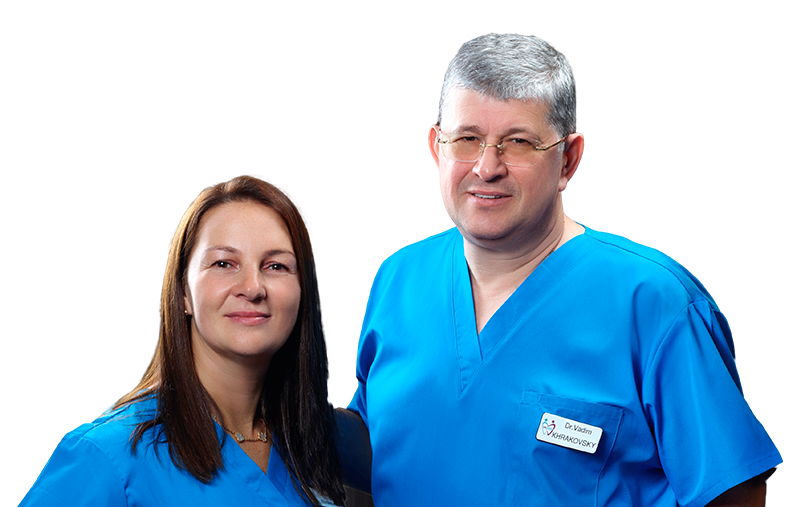
Dr. Vadim will assess your alignment, show you a digital preview of your projected Invisalign outcome, and give you a clear recommendation based on your teeth — not a default sales pitch. If Invisalign is not the right tool for your case, you will be told that and given the reason.
You can view before-and-after results from our Invisalign patients before you come in, and explore our full Invisalign treatment page for detail on the process and timeline.
If you are also considering cosmetic work alongside alignment — whitening, veneers — our cosmetic dentistry page explains how those treatments are typically sequenced after orthodontic treatment is complete.
Ready to Find Out Which Option Is Right for Your Teeth?
Call Bright Smile Dental at (646) 859-7048 or Book Your Consultation Online. We will give you a straight answer.